When Oleh came to the United States from Ukraine with his wife and son, he was seeking safety, stability, and the chance to build a future for his family. Leaving home meant walking away from a life he had worked hard to create, including his career and treasured collections of cognac and antique firearms. It was a painful transition, but one he faced with gratitude for the opportunities and peace his family found in America.
“Coming to America has been a great transition,” Oleh shared with his Supports Planner, Antoinette, “but one that I can now say I love.”
Shortly after arriving in the United States, Oleh was diagnosed with cancer in his leg. By the time Antoinette met the family in June 2025, he had already undergone surgery and begun chemotherapy. Together, they developed a plan of service to address the family’s immediate needs and create support during an incredibly uncertain time.
As Oleh focused on treatment, another concern brought tremendous fear and stress: the family’s temporary visa was set to expire while he was still receiving medical care. Returning to Ukraine before completing treatment felt overwhelming and unsafe for the family.
Drawing on her prior experience with the Maryland Department of Human Services, Antoinette began researching possible immigration options. She contacted former colleagues and U.S. Citizenship and Immigration Services for guidance and learned that Oleh could apply for a medical emergency visa extension by filing Form I-539 with extensive medical documentation.
Antoinette coordinated directly with Oleh’s physician to obtain the necessary records, gathered supporting documentation, and met with the family in their home to complete the application. Once everything was submitted, the waiting began.
For months, Antoinette and Oleh continued working closely together, checking for updates and encouraging one another through the uncertainty. Because the process could take up to a year, each day brought difficult waiting. Then, one day, Oleh sent Antoinette a message: the decision had arrived, and his medical extension visa had been approved.
The approval brought overwhelming relief and joy to Oleh and his family. Most importantly, it meant he could continue his cancer treatment safely in the United States without fear of deportation.
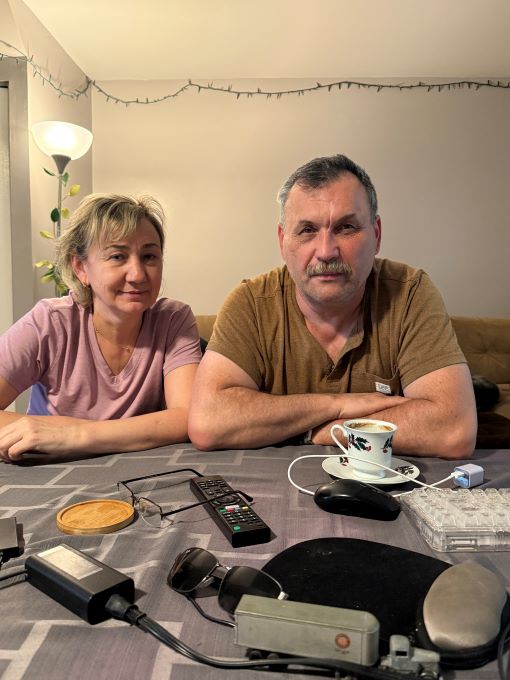
At a recent annual service meeting, Antoinette saw a remarkable transformation. Oleh’s chemotherapy was complete, and there was no evidence of cancer at that time. His wife welcomed Antoinette into their home with tea and chocolate biscuits, remembering small details from their first meeting. Proudly, Oleh showed how much stronger he had become and shared his hope of returning to work, even if part-time.
Before the visit ended, Oleh offered Antoinette a bottle of cognac. She politely declined, but recognized the gesture as something meaningful: Oleh had begun rebuilding one of the passions he thought he had lost forever. His wife smiled and said, “He has started living, planning, and dreaming again.”
Oleh’s story reflects the heart of support coordination: walking alongside people and families through complex systems, connecting them to resources, and honoring their goals, dignity, and right to move forward with hope. With compassionate advocacy and trusted support, Oleh and his family found more than an extension of time. They found space to heal, rebuild, and imagine the future again.